Furnace Tune-Up Checklist: What to Do Before Utah's First Cold Snap
The first cold morning of the season is when furnaces fail and phone lines jam. Run this checklist in late August or September and you will find the problem while it is still a cheap fix.
Every year the same thing happens along the Wasatch Front. Temperatures drop into the 30s overnight in late September or early October, thousands of furnaces run for the first time in five months, and a chunk of them do not light. Our schedule fills in a day. The homeowners who tested their heat in August are not on that list.
Do this first: run the heat for 15 minutes
Pick a cool morning, set the thermostat to HEAT and bump the setpoint five degrees above room temp. Let it run a full cycle. You are looking for three things: does it light, does it stay lit, and does hot air actually reach the far rooms. A burning dust smell for the first few minutes is normal. Anything past ten minutes is not.
The homeowner checklist
Replace the filter. If it has been in since spring, it is done. Note the size printed on the frame so you can buy in bulk.
Clear the area around the furnace. No boxes, no paint cans, no stored anything within three feet. Combustion air matters.
Check the flue and intake pipes outside. Wasp nests and bird nests in the PVC intake are a real and common cause of no heat calls.
Test your CO alarms. Press the button, and replace any unit older than seven years regardless of what the button says.
Open every supply and return vent in the house and pull rugs and furniture off the floor registers.
Look at the flame if your unit has a sight window. Steady blue is right. Yellow, lazy, or flickering flame means call us before you run it again.
Warning signs worth a call now, not in October
Furnace lights, runs a couple of minutes, then shuts off and retries. That short cycling pattern usually points at a flame sensor, a pressure switch, or restricted airflow.
Loud bang at ignition. Delayed ignition means gas is pooling before it lights, and it is hard on the heat exchanger.
Grinding or squealing from the blower.
Water around the base of a high efficiency unit, which points to a plugged condensate drain.
Rooms that never got warm last winter. That is a balance or duct issue we can fix before the season, not during it.
What a professional tune-up covers that you cannot
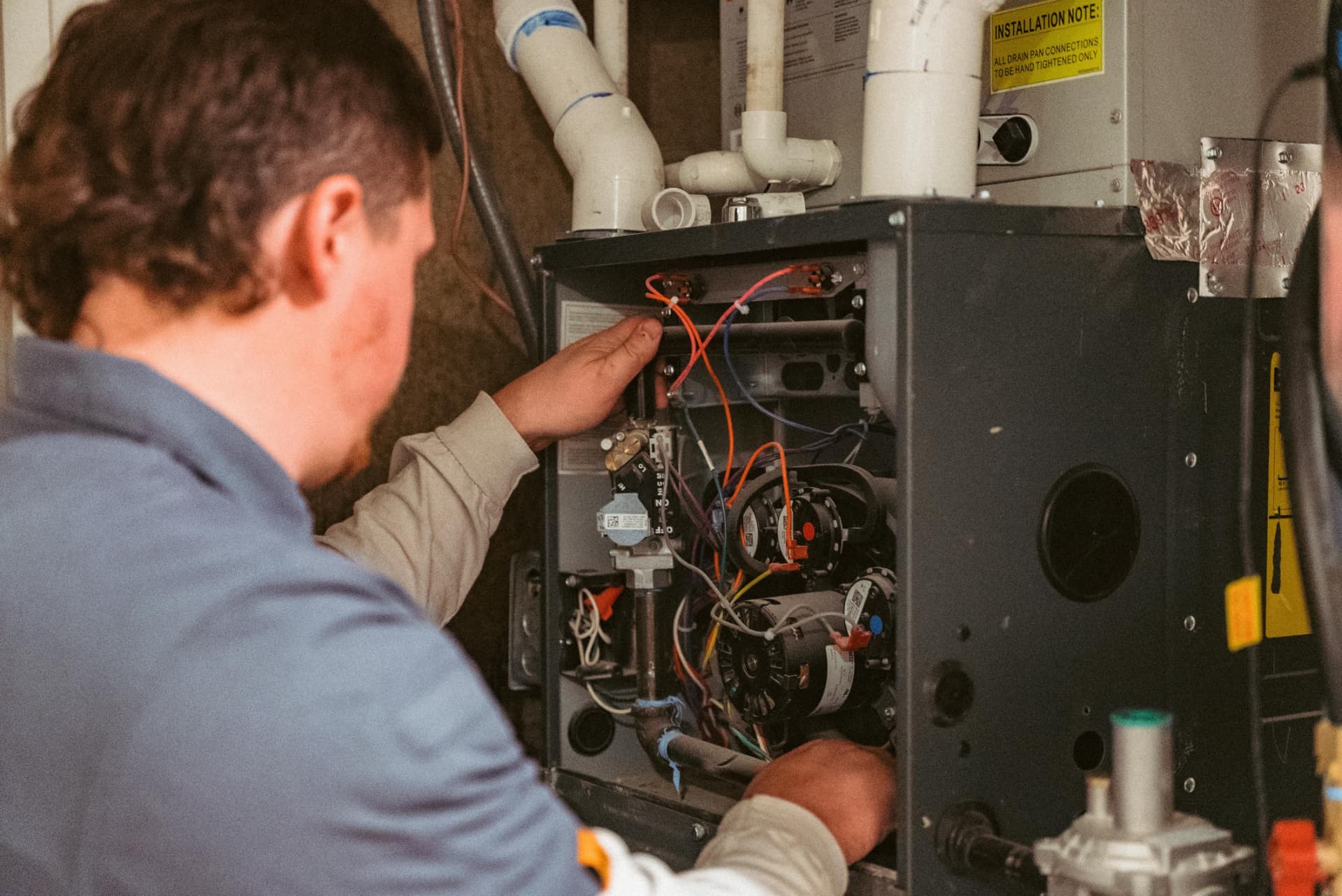
Our techs clean and test the flame sensor, inspect the heat exchanger for cracks, check gas pressure and temperature rise against the manufacturer's spec, test the safety switches, measure blower amp draw, and verify the venting is drawing correctly. The heat exchanger inspection is the one that matters most. A cracked exchanger can put carbon monoxide into your living space, and there is no way to check it from the outside of the cabinet.
Timing
Late August through September is the window. Parts are available, our schedule is open, and if something needs replacing you are doing it on your timeline instead of on the coldest night of the year at emergency pricing.
Can lights and ceiling fans look like simple upgrades until you get into the attic. Here is what actually drives the price, the code rules that apply in Wasatch Front cities, and how long a typical job takes.
A breaker doing its job is not a defect. But there are three very different reasons one trips, and telling them apart tells you whether you can reset it or need to stop touching it.