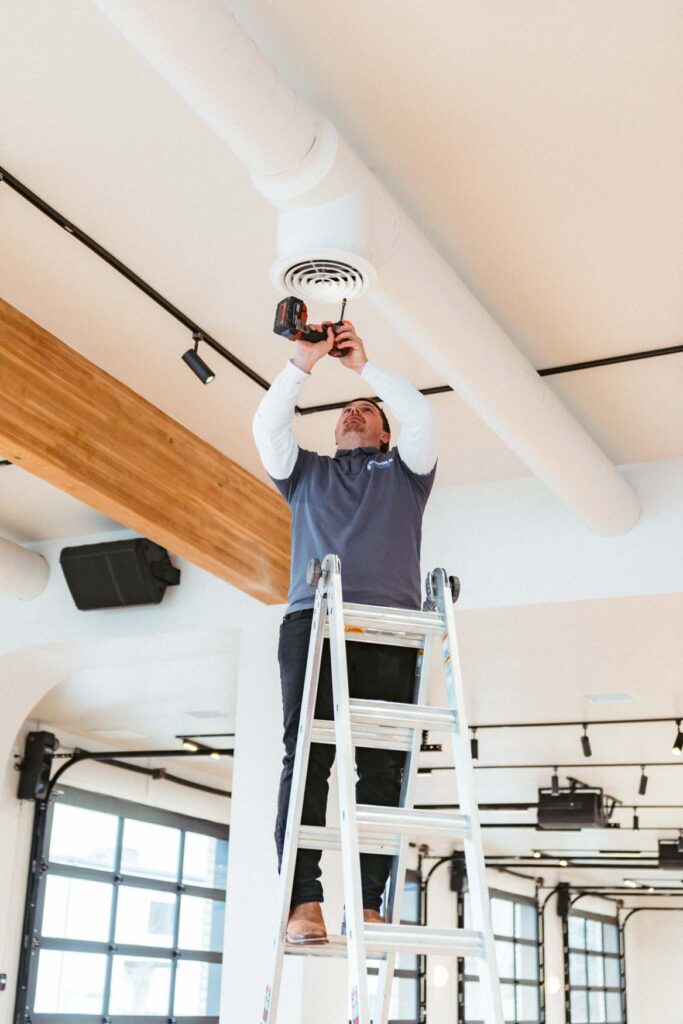
Recessed Can Lighting in Springville, UT
A Homeowner’s Guide to Cleaner Ceilings, Better Light, and Safer Installation
If a room feels dim, “spotty,” or cluttered with outdated fixtures, recessed can lighting in Springville, UT is one of the cleanest ways to modernize your lighting without adding visual bulk. But homeowners often hesitate because they’ve heard it can be messy, complicated, or risky around insulation and wiring.
At All Systems Go, we help Springville, Utah homeowners and businesses plan and install recessed lighting that looks intentional, performs well, and aligns with safe electrical practices.
What Is Recessed Can Lighting?
Recessed can lighting is a fixture installed into a ceiling opening so the housing sits above the drywall and the visible trim sits at the ceiling line.
Common terms you’ll hear
You’ll see these phrases used interchangeably in searches and product labels:
- Can lights / can lighting
- Downlights
- Pot lights
- Recessed lighting
- LED recessed lights
- Retrofit recessed lighting
- Wafer lights (ultra-thin recessed lights)
Can lights vs. wafer lights (ultra-thin recessed)
“Wafer” style recessed lights are thin and often used where ceiling space is limited. Traditional can lights use a housing (“can”) above the ceiling. If you’re deciding between the two, the right answer depends on your ceiling depth, access, and the lighting goal (wide wash vs. precise control).
Recessed Lighting Layout and Spacing: How Many Lights Do You Need?
A common planning approach is to space recessed lights evenly to avoid “spotlighting” and shadows, then fine-tune placement based on ceiling height, beam spread, and what you do in the room (cooking, reading, relaxing). The goal is uniform coverage—not a runway of bright circles.
Here’s a practical way we help homeowners think about it:
Start with the purpose of the light
- Ambient lighting (general room light): Even spacing across the room
- Task lighting: Positioned over countertops, desks, vanities, or work zones
- Accent lighting: Aimed toward artwork, wall texture, shelves, or focal points
Avoid common layout mistakes
- Placing lights too close to walls, creating harsh “hot spots”
- Ignoring furniture placement (lights end up
- behind ceiling fans or over tall cabinets)
- Mixing different color temperatures in one room (it looks mismatched fast)
A simple placement checklist
- Mark primary walk paths and work areas first
- Keep symmetry where it matters (kitchens, living rooms)
- Use fewer, better-placed fixtures instead of “more is better”
LED Recessed Lighting: What to Look For Before You Buy
Modern recessed lighting has lots of options—trims, beam angles, and installation types. LED tends to be the go-to because it’s efficient and long-lasting, but you still want the right features for your home.
Remodel vs. new construction housings (LSI keyword topic)
- New construction housings are typically used when the ceiling is open (new build or major remodel).
- Remodel housings are designed for installation from below when the drywall is already in place.
Trim styles and why they matter
Trim changes how the light “feels” in the room:
- Baffle trim: Reduces glare and softens the light
- Reflector trim: Brighter, often used for higher output needs
- Gimbal/eyeball trim: Directional light for accents or sloped ceilings
Recessed Can Lighting Installation in Springville, UT: What the Process Typically Involves
Yes—many recessed lighting projects are retrofit installations where drywall stays in place and the work is completed from below, depending on access and wiring paths.
While every home is different, a professional installation process commonly includes:
- Planning the layout
- Identify the lighting goal (ambient/task/accent)
- Confirm joist direction and ceiling constraints
- Selecting the right fixture type
- Can vs. wafer
- IC-rated when insulation contact is expected
- Mapping safe wiring routes
- Minimize drywall disruption
- Keep connections accessible as required
- Cutting precise ceiling openings
- Correct size for the chosen housing/trim
- Installing housings/fixtures and trims
- Secure mounting, proper alignment, clean finish
- Testing
- Verify consistent operation, switching behavior, and intended light coverage
If you’re in Springville and you’re considering recessed lighting, we’ll help you avoid the two biggest frustrations: uneven light and a ceiling that looks patched-up after the upgrade.
Do Recessed Lights Need a Junction Box?
Many recessed lighting systems include an integrated junction box or wiring compartment as part of the fixture/housing assembly. The key is that electrical connections must be made in an approved enclosure and remain accessible as required. (The exact approach depends on the product type and installation method.)
If you’re unsure what your ceiling can accommodate, it’s safer to plan the fixture choice after confirming ceiling depth, insulation conditions, and wiring pathways.
Recessed Lighting Maintenance: What Homeowners Should Expect
Recessed lighting is generally low-maintenance, especially with LED setups. Still, it’s good to watch for:
- Flickering or intermittent operation (could be a switch, driver, connection, or fixture issue)
- Uneven color output (mismatched fixtures or aging components)
- Overheating shutoffs (can indicate rating/insulation issues or fixture problems)If something seems off, it’s worth addressing quickly rather than living with it—especially if the fixture is near insulation or enclosed spaces.
Up-Front, Honest Pricing
No hidden fees. No surprises. Before we begin any work, we provide a clear, flat-rate price so you know exactly what to expect. The price we quote is the price you pay — unless the scope changes, your cost won’t. It’s that simple.
FAQ: Common Questions Homeowners Ask
Can recessed lighting work with smart switches or home automation?
Often, yes—depending on the fixture type and the control you want (dimming, schedules, scenes). The key is matching the fixture’s driver requirements with the right smart control.
What color temperature should I choose for recessed lighting?
Many homeowners prefer warmer tones for bedrooms and living areas and cleaner, brighter tones for kitchens and workspaces. Consistency within a room matters more than chasing a trend.
Can recessed lights be used outdoors under soffits or covered patios?
They can be—if the fixture is rated for the environment (damp/wet location ratings where applicable). Outdoor-rated selection is important for longevity and safety.
What should I do if a recessed light flickers or cuts out?
Start by noting whether it happens on dimming, only with one fixture, or after the light has been on a while. Flicker can come from an incompatible dimmer, a loose connection, or a fixture/driver issue. A proper inspection can pinpoint it quickly.

Keep Your Springville Home Warm and Safe
Posted onTrustindex verifies that the original source of the review is Google. We used All Systems Go to install a brand new HVAC system in our house, do all of the electrical, and install a new water heater as we were completing our basement. Travis provided valuable insights and feedback on our systems that had been built with the house, and was helpful in identifying the most cost effective solution. For each system installed that qualified for rebates, All Systems Go filled out all of the paperwork and submitted it to the utilities so we could get the checks in the mail. It was totally seamless and incredibly helpful with all that we had going on. The quality of the electrical and HVAC was second to none. We were able to do some smart lighting and everything is working seamlessly. Our basement and house is incredibly comfortable now, with everything working exactly as we hoped it would! I highly recommend All Systems Go for any electrical/HVAC.Posted onTrustindex verifies that the original source of the review is Google. 10/10 These guys are the best. We used All Systems Go to finish our basement and do a remodel of our upstairs. From our first meeting with Richard and Travis, we were so impressed with how thorough (and accurate!) they were with their estimates, and how much they listened to what we needed and wanted and worked with us as we designed the basement and remodeled our upstairs. Richard and Travis coordinated and did all of the plumbing, framing, and finished carpentry for our house. Working with contractors like them was honestly a joy. They were reliable, honest and trustworthy, and their attention to detail was second to none. As we designed the basement, they suggested we purchase vanities from Costco to help us meet our budget and they built the bathrooms around these vanities and they fit perfectly! They matched the design of our upstairs. They turned our tiny pantry and tiny laundry room into an incredible Butler's Pantry for us. Then they added a hidden washer/dryer in our upstairs closet which also led to an extra closet in the master bedroom. They were so aware of our needs and space and helped utilize every inch, so nothing went to waste. The finishes and work were so good - it matched our house perfectly. Everyone who comes in is shocked at the quality and attention to detail. They also helped us set the stage for our next round of remodeling. Because we bought a house with an unfinished basement, we were able to plan and prepare for the next stages of remodeling we will do in the future; ie putting in a kitchen in the basement. Travis and Richard helped us map out where everything will go, plumb and hardwire everything, so when we are ready, it will be a much easier process! It was so helpful to be able to maximize our time and budget by preparing for our future plans now. I couldn’t recommend them enough!!! They are already doing my neighbors remodel! The way they listened to what we needed and wanted and then made it happed, was an absolute dream come true. I can honestly say I miss having them around, and who can say that about their contractors? They are PHENOMENAL!Posted onTrustindex verifies that the original source of the review is Google. 10/10 These guys are the best. We used All Systems Go to finish our basement and do a remodel of our upstairs. From our first meeting with Richard and Travis, we were so impressed with how thorough (and accurate!) they were with their estimates, and how much they listened to what we needed and wanted and worked with us as we designed the basement. Richard and Travis coordinated and did all of the plumbing, framing, and finished carpentry for our basement. Working with contractors like them was honestly a joy. They were reliable, honest and trustworthy, and their attention to detail was second to none. As we designed the basement, they suggested we purchase vanities from Costco to help us meet our budget and they built the bathrooms around these vanities and they fit perfectly! They matched the design of our upstairs. They built out a Butler’s Pantry for us and a hidden washer/dryer in our upstairs master bedroom. The finishes and work were so good - it matched our house perfectly. Everyone who comes in is shocked at the quality and attention to detail. I couldn’t recommend them enough. The way they listened to what I needed and wanted and helped make it happen for our house was a dream come true for what we needed.Posted onTrustindex verifies that the original source of the review is Google. Travis T. and his crew do amazing HVAC & Electrical Work. Richard and Travis H. are amazing at working with clients to accomplish their dream build/remodel/addition/commercial space, etc.Posted onTrustindex verifies that the original source of the review is Google. I've had ASG do several projects for me....most recently and $800k full remodel and addition. Couldn't ask for a more honest, competent, reasonable, decent crew. Obviously a 15-month large scale project has some bumps, but would do it all over again and would hire them for the project. Have had Travis dash over several times for issues after the fact that were not even their issue, but they jumped on it and helped anyway. Always answers the phone when stuff comes up, has thoughtful insightful remedies and is always willing to entertain my crazy ideas for modifications and scope creep. Most importantly my house looks like something out of a magazine now....far exceeded my expectations...and I get to hear folks eww and ahhh constantly as everyone from the UPS driver to neighbors to friends who haven't seen the renovated house drop by and see it.Posted onTrustindex verifies that the original source of the review is Google. Awesome company with integrity and fair pricing. Hard to find good people these days! They do way more than I expected. Mini splits, water heaters, full remodels. Look no further if you’re needing a top dollar general contractor.Posted onTrustindex verifies that the original source of the review is Google. TRAVIS AND LOGAN WERE GREAT TO WORK WITH. VERY PROFESSIONAL AND QUICK TO RESPOND TO ANY MESSAGES AND QUESTIONS, REGARDING THE WORK DONE ON MY PROPERTY.
Ready to Upgrade Your Lighting? Let’s Design a Recessed Can Lighting Plan That Fits Your Springville Home
When your home’s electrical demand grows, your service equipment must keep up. An outdated or undersized meter base can limit expansion and create unnecessary risk. At All Systems Go, we specialize in Electrical Meter Upgrade in Springville, UT, helping homeowners safely modernize their electrical systems for today’s power needs.
If you’re planning a renovation, installing new equipment, or experiencing signs of electrical strain, now is the time to act. Call (801) 874-1996 or visit our contact page. Let’s ensure your home in Springville, UT is ready for the power demands of tomorrow.
Service Area
We proudly serve clients throughout Salt Lake County, Summit County, Utah County, and other parts of northern Utah – including:
- Alpine
- American Fork
- Bluffdale
- Draper
- Heber City
- Herriman
- Kamas
- Lehi
- Mapleton
- Murray
- Orem
- Park City
- Payson
- Pleasant Grove
- Provo
- Riverton
- Salt Lake City
- Sandy
- Saratoga Springs
- Spanish Fork
- Springville
- Taylorsville
- West Jordan
- West Valley City

Quick and ReliableService

Trusted Craftsmanship

Upfront, HonestPricing
Keep your home comfortable in every season
- Call now to dispatch a pro to your home: